Septic Services for Restaurants, Offices, and Retail Spaces


Commercial septic systems rarely get much attention when everything is working. Toilets flush, sinks drain, floors stay dry, and the building opens on time. That is exactly how it should be. The problem is that many business owners, property managers, and tenants only think about septic services when there is already a mess, a smell, or a shutdown.
In commercial settings, septic trouble is more than an inconvenience. It can interrupt service, damage inventory, create health concerns, trigger failed inspections, and sour a customer’s impression in a matter of minutes. A restaurant with a backed-up line can lose an entire dinner rush. An office with restroom issues can send employees home. A retail space with odors near the entrance can drive away foot traffic without anyone saying a word.
The needs of a commercial property are different from those of a house. Usage is heavier, peak loads are sharper, and the cost of downtime is much higher. Restaurants produce fats, oils, grease, and food solids. Offices create predictable but sustained restroom demand. Retail spaces may swing from quiet weekdays to intense weekend traffic. Good septic services account for those realities instead of treating every tank and drain field the same.
Commercial septic work is about reliability, not just pumping
Many people use the phrase septic services to mean pumping the tank and leaving. Pumping matters, but it is only one piece of the job. In a commercial environment, the real goal is operational reliability. That means understanding how the building uses water, what enters the system, where bottlenecks form, and how to reduce the odds of an emergency.
A well-run service visit usually includes more than a truck and a hose. It involves measuring sludge and scum levels, checking baffles, looking for signs of inflow or infiltration, noting unusual odors, and asking practical questions about occupancy and operating hours. If the technician never asks how many meals a restaurant serves on a Friday night or how many employees use an office break room, that is a missed opportunity. The system does not exist in isolation. It reflects the habits of the business attached to it.
Commercial septic maintenance also tends to be more dynamic than residential maintenance. A small office with twelve employees may go years with modest demands. That same building can change fast if a medical tenant moves in, a training center adds classes, or a café opens in a shared suite. I have seen property owners assume the old service interval still applies because the square footage has not changed. Meanwhile, the water use has doubled.
Why restaurants place the heaviest demands on septic systems
Restaurants are hard on wastewater systems in ways that are not always obvious from the dining room. The public sees tables, plates, and polished floors. The septic system sees grease, food particles, detergents, sanitizer, dishwasher discharge, handwashing, prep sink waste, and restroom traffic compressed into lunch and dinner peaks.
Grease is usually the first issue people mention, and for good reason. Fats, oils, and grease do not behave kindly once they cool. They cling to pipes, slow the flow, trap solids, and contribute to blockages that start small and become expensive. A restaurant can appear fine for weeks while buildup forms in quiet sections of the line. Then a busy Saturday night puts enough volume through the pipe to expose the restriction.
Even when a grease trap or interceptor is installed, trouble still happens if cleaning schedules slip or kitchen staff treat drains like disposal chutes. Rice, coffee grounds, shredded vegetables, sauces, and mop water all add up. A drain line does not care whether the waste entered in tiny amounts over time or all at once during cleanup. It only responds to load.
Restaurant septic services have to account for both the tank and the upstream plumbing behavior. If a service provider pumps the tank but ignores recurring grease accumulation in the lines, the owner may pay for maintenance and still face backups. The right approach connects the dots between kitchen practice, grease management, pumping frequency, and drain line condition.
One restaurant owner I worked with had a pattern that looked random at first. Every few months, after a holiday weekend, the prep area floor drain would burp water and the dishwasher would drain slowly. The tank was not technically overdue, so staff assumed the problem was somewhere inside the building. It turned out the real issue was a combination of a partially full grease interceptor, heavy seasonal volume, and a habit of washing stockpot residue down the wrong sink at closing time. None of those factors alone caused a disaster. Together, they created one predictable failure point.
Offices have different risks, but they still need consistent septic services
Office buildings are often easier on septic systems than food service spaces, yet they present their own operational patterns. Restroom use clusters around arrival times, lunch breaks, and late afternoon. Break rooms contribute sink use and occasional garbage disposal misuse, if disposals are present at all. Cleaning crews may add nighttime loads that owners forget to count when they estimate usage.
One challenge with offices is complacency. Since there is no fryer grease and no dish pit, management may assume the septic system can be ignored. That assumption usually holds until the staff count rises, remote workers return, or the tenant mix changes. A call center, a shared workspace, and a professional firm with a few private offices do not stress a system in the same way, even when they occupy similar square footage.
Another office issue is the false flush. Employees tend to believe that if something says flushable, it is safe for the system. Wipes are a common culprit, even in buildings with modern restrooms and clear signage. Septic tanks and pumps do not process wipes gracefully. They wrap around components, form mats, and create problems that a standard cleaning interval may not catch early enough.
In office environments, septic services often work best when they are built into a facilities calendar instead of handled as a once-in-a-while repair item. Managers already track HVAC filters, fire inspections, and elevator maintenance. The septic schedule belongs in the same conversation because restroom reliability affects the whole workplace.
Retail spaces can be deceptively demanding
Retail spaces often appear simple on paper. Compared with restaurants, they usually have less water use and fewer kitchen-related contaminants. But the category is broad, and broad categories hide risk. A boutique with three employees is not the same as a grocery annex, a salon supply store, a garden center, or a big seasonal retailer near a highway exit.
Retail traffic can surge fast. Holiday weekends, promotional events, sidewalk sales, and tourist seasons create heavy restroom demand over short windows. Many retail leases also change hands more often than office leases, and with each new tenant comes a chance that water usage patterns will shift without anyone revisiting the septic maintenance plan.
The most overlooked retail issue is deferred attention. Because the system may seem to perform fine for long stretches, warning signs get rationalized away. A faint odor near the stockroom floor drain becomes “just humidity.” A gurgling employee restroom becomes “old plumbing.” Slow drainage after storms becomes “one of those things.” Those explanations usually last until customers notice.
Retail property owners benefit from septic services that include periodic inspection, not only emergency response. Even a simple site walk can reveal soft spots near the drain field, evidence of surface pooling, or venting odors that a busy manager stopped noticing weeks ago.
Warning signs that should never wait
When commercial septic systems start failing, they tend to offer hints before a full breakdown. The trouble is that businesses are busy, and small warnings are easy to dismiss. These are the signs that deserve prompt attention:
- Recurring slow drains in more than one fixture
- Sewage odors inside, especially near restrooms, floor drains, or utility rooms
- Gurgling sounds after flushing or sink use
- Wet, spongy, or unusually green areas near the tank or drain field
- Backups that seem tied to peak business hours
Each of these can point to a different issue. Slow drains across several fixtures may indicate a line restriction or a full tank. Persistent odors can suggest venting problems, failing seals, or septic gases escaping where they should not. Wet ground near the field may mean hydraulic overload, poor drainage conditions, or system failure. What matters is the pattern. A good technician does not treat every symptom as a generic clog.
Pumping schedules should follow real usage, not guesswork
Business owners often ask the same question: how often should a commercial tank be pumped? There is no honest one-size answer. The proper interval depends on tank size, occupancy, water use, grease load, employee habits, customer traffic, and whether pretreatment devices are doing their job.
A restaurant may need significantly more frequent service than a small office, sometimes several times more often. A retail store with public restrooms may look light-use for ten months and then become heavy-use during a holiday season. Mixed-use properties are trickier still. If a coffee shop shares a lot with office suites, the wastewater profile changes throughout the day.
The best practice is to start with a baseline inspection and then adjust based on measured accumulation and operating history. That is much more reliable than choosing an arbitrary annual date and hoping for the best. In the field, I have seen tanks pumped too often, which wastes money, and too rarely, which creates far larger costs through backups, emergency calls, and drain field stress.
This is where recordkeeping matters. A property manager who can say, “We pumped in March, occupancy increased in June, and we started seeing slower recovery in the women’s restroom by September,” gives a service provider useful data. Maintenance should be informed by what the building is actually doing, not what it used to do three tenants ago.
The hidden cost of waiting too long
Emergency septic work almost always costs more than planned maintenance, but the invoice rarely tells the whole story. The direct charge is only part of it. The real cost includes disruption, cleanup, sanitation, staff downtime, lost sales, reputational damage, and in some industries, regulatory complications.
A restaurant that closes for one evening may lose far more in revenue than the cost of a scheduled pumping visit. An office with unusable restrooms may face productivity issues and employee complaints. A retail store that smells like sewage near the fitting rooms has a sales problem, even if no formal closure occurs.
There is also the matter of the drain field. Tanks can be pumped and lines can be cleaned, but once a drain field is badly compromised, the discussion becomes more expensive and more invasive. Resting, repairing, or replacing parts of the dispersal area can involve excavation, site constraints, permitting, and significant interruption. Preventive septic services are not glamorous, but they are usually far cheaper than field rehabilitation.
What good septic services look like in a commercial setting
The quality of service matters as much as the frequency. Commercial clients need more than a vendor who shows up only when called. They need a provider who can spot developing issues, communicate clearly, and work around business hours when possible.
A strong commercial septic partner usually does a few things well:
- Evaluates usage patterns instead of relying only on tank size
- Documents findings and recommends realistic service intervals
- Understands grease control, line maintenance, and fixture-related issues
- Coordinates with managers to minimize disruption to customers and staff
- Flags small problems before they become shutdowns
That kind of service is especially valuable for businesses with multiple locations or shared ownership. Standardized records and consistent inspection notes help decision-makers compare sites and plan budgets with fewer surprises.
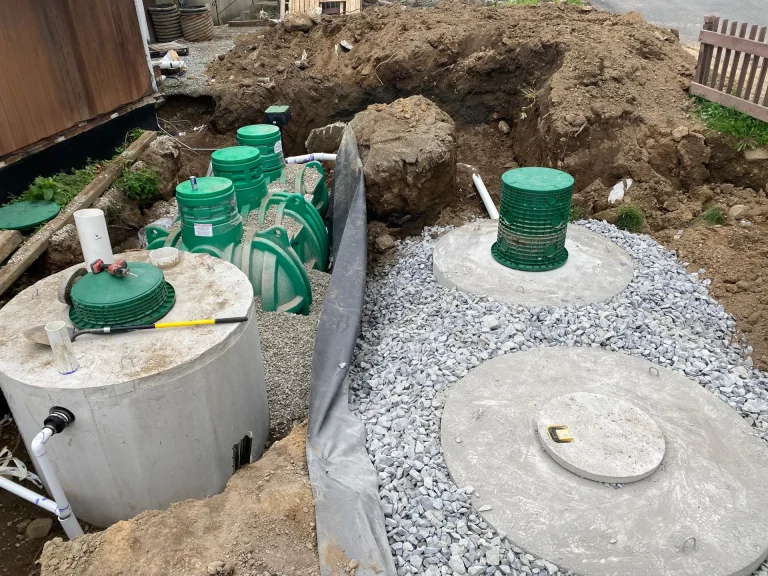
It also helps when the provider understands the business itself. A technician who knows not to schedule a restaurant service during prep for the weekend rush is not just being polite. They are reducing operational friction. The same goes for offices with limited restroom capacity or retail stores during promotional events.
Grease traps, pretreatment, and the upstream habits that matter
For restaurants and some food-related retail concepts, grease management deserves separate attention. Too many septic problems start upstream and only appear downstream. Staff training matters here more than many owners realize.
A grease trap or interceptor is not permission to send anything down the drain. It is a control point, not a cure-all. When kitchen teams scrape plates poorly, rinse pans full of oil, or wash heavy solids into sinks, the trap fills faster and performs worse. Then the septic system inherits the consequences.
Pretreatment devices also need their own maintenance discipline. If a trap is neglected, solids and grease bypass increase. If staff clean equipment improperly, they may wash concentrated waste into the very system meant to protect the tank and field. That is why the best septic services for restaurants often include some blunt operational advice. Maintenance providers sometimes hesitate to say it, but process habits inside the kitchen can undo a lot of expensive preventive work.
Site conditions can change the whole equation
Not every septic issue is caused by usage alone. Site conditions matter. Heavy rains, high groundwater, compacted soils, vehicle traffic over buried components, and poor grading can all affect system performance. A retail center that added parking near the drain field may not notice any immediate issue, but repeated compaction can reduce the field’s ability to disperse effluent over time.
Landscaping can create trouble too. Roots from nearby trees and shrubs do not care about utility boundaries. They search for moisture and nutrients, and septic lines provide both. In older commercial properties, root intrusion is a common reason that backups keep returning after what seems like an adequate cleanout.
Seasonality also matters more than many people expect. Tourist towns, school-adjacent businesses, summer event venues, and holiday-driven retailers often load systems in bursts. A tank that performs adequately in February may struggle in July. That is not inconsistency, it is a response to volume.
Budgeting for septic services without overpaying
Commercial owners sometimes swing between two bad approaches. The first is to ignore the system until a problem forces action. The second is to overspend on unnecessary visits because nobody has enough information to feel confident. The better approach sits in the middle: inspect, measure, document, and adjust.
Predictable maintenance is easier to budget than emergency cleanup. It also allows managers to bundle related work logically. If line jetting, interceptor cleaning, or inspection access improvements are needed, those items can often be planned during slower periods instead of handled in a crisis.
For leased spaces, communication between landlord and tenant is important. The lease may assign responsibilities differently, but wastewater behavior does not care about legal language. If a tenant’s operations are changing, the owner should know. If the owner has system limitations, the tenant should know. A lot of avoidable septic trouble starts with assumptions on both sides.
A practical approach for business owners and property managers
The most effective septic strategy is rarely complicated. It is disciplined. Start with a clear picture of the https://garrettmpir179.bearsfanteamshop.com/what-sets-professional-septic-services-apart-from-diy-fixes system, match the maintenance schedule to actual use, and pay attention when the building tells you something has changed. If you run a restaurant, treat grease control as a daily operating issue, not only a service issue. If you manage offices, account for occupancy changes and break room habits. If you own retail space, do not let seasonal traffic hide a growing problem.
Commercial septic systems do not ask for attention every day, but they do reward consistency. Businesses that stay ahead of pumping, inspections, and upstream practices usually avoid the worst disruptions. Businesses that wait for obvious failure often discover that the real damage started much earlier.
Reliable septic services protect more than pipes and tanks. They protect business hours, customer experience, staff working conditions, and the reputation of the property itself. That makes them part of operations, not an afterthought tucked behind the building.
Excavating New Jersey LLC
Address: 406 County Rd 565, Wantage, NJ 07461
Phone number: +19737914284
FAQ About Septic Services
What is the average cost to get a septic tank emptied?
Emptying a septic tank costs between $290 and $560 on average, with most homeowners paying about $420. Prices vary based on tank size.
What is septic service?
Septic service inspects, pumps, cleans, and maintains a septic tank. A septic tank is a large, underground container that collects and treats wastewater from your home. Over time, sludge, scum, and other debris, like hair and solids, can build up in your tank and clog your drain field.
How often should you have a septic tank serviced?
A standard septic tank should be inspected every 1 to 3 years and pumped every 3 to 5 years. However, the exact schedule depends on your tank's capacity, household size, and daily water usage.